Introduction
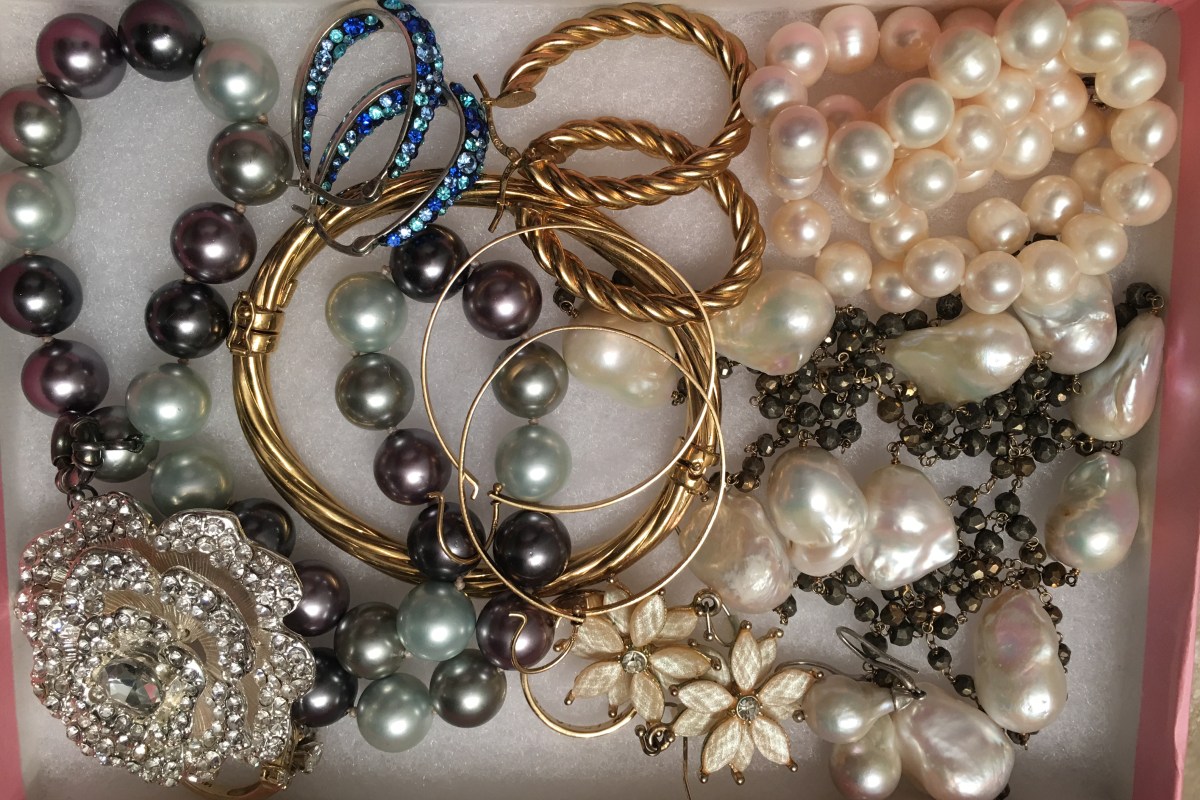
This writing examines the custom of wearing jewelry and accessories, and its biblical relevance. It will seek to answer the question: Is it okay to wear jewelry as a Christian?
According to the Merriam-Webster online Dictionary, the term jewelry means objects of ‘precious metal’ often set with gems and worn for personal adornment’. Accessories are objects or devices that is not essential in itself, but adds to the beauty, convenience, or effectiveness of something else’. As such, jewelry can be considered a type of accessory, and accessories can include jewelry or other aesthetics to augment beauty that are worn on the body, or clothing. Ornaments are things that makes more attractive, but has no practical purpose in itself. As such, ornaments include both categories.
My interest in this topic piqued after reading testimonies of persons with heaven and hell encounters; videos, literature and related sermons by persons who were certified dead and came back to life, or who had related dreams, visions or out of body experiences. I initially denounced the testimonies as false, but upon inquiry from the Lord, I was led to examine more carefully. My research included persons from various background; different countries, and ethnicity with similar encounters. I discovered that most of the writings though diverse, had similar perspectives on jewelry and accessories, among other things, such as women should not wear trousers/pants, and false hair attachments etc. I researched the latest updates from these individuals, and found that since their heaven and hell encounters, ‘holiness’ is a consistent theme in their messages.
The fashion of wearing jewelry is so universal, that the tendency to use is commonplace. It is the epitome of the fashion industry, and very pervasive in the American culture, where celebrities are imitated and idolized. These influencers set the standard for what is categorized as beautiful and acceptable. As the reigning superpower and global democratic role model, the pop culture of America has a worldwide appeal, and has trickled into many cultures to influence fashion on a global scale. The signs of the times indicate that we are living in the last days, where Matthew 24:24 indicates that if it were possible, the very elect would be deceived. We are commissioned to be sober and vigilant, because our adversary, the Devil has had thousands of years perfecting strategies to kill, steal and destroy.
The nature of deception is so subtle that many are marching to hell unawares. There are numerous pitfalls that would guarantee hell for a majority; the avenues are countless. The appeal of the fashion industry is a lure that is difficult to resist in our contemporary society, for both male and female alike. Our younger generation is at a higher risk, because liberal mores has become the cultural norm. For example, the first American female to wear pants/trousers publicly was Elizabeth Miller in 1851, which subsequently led to a market for the design of female versions of trousers. Consequently, millennial’s cannot envision a time when women did not wear pants, except in retro movies, or for religious stipulation. The yardstick is now the distinction between retro fashion styles and orthodox religious fashion; and both are viewed as too conservative.
The fundamental question is, ‘is it okay to wear female pants/trousers/jeans, because they are specifically designed for females’? Just over 200 years ago, an answer that would have been ‘No’, is now a gray area, because the versions of pants created for women have a distinct feminine look. Such that if a male is wearing ‘female pants/trousers, it is noticeably feminine. Similarly, is it okay to wear jewelry because it is a contemporary fashion? Our current generation is so heavily influenced by the fashion of our day, that many Christians use of jewelry and accessories is equivalent to that of pagans use in the biblical era. This is mainly due to the fact that jewelry and accessories are so popular that we have become desensitized, and accepting of this norm. Contrary to the women in the Bible, women rarely cover their heads and faces in public. There is a desire to be recognized, appreciated, and in some instances, treated equally as men. As such, women with little or no accessories may substitute with make-up, or wear provocative or expensive attires to compliment their beauty, or project a desired image. On the other hand, men wear jewelry to compliment their clothing, as an ‘attention grabber,’ or to show affiliation to cults etc.
God in His infinite wisdom has given us His Word as a lamp and light, and His Spirit to guide us into ‘all truth’. Therefore, let us examine the Word of God under the guidance of the Holy Spirit to understand the will of God concerning us. For our adversary the devil is as a roaring lion seeking whom he may devour, and he is the accuser of the brethren. As Christians, we are ambassadors of the Kingdom of our Lord and Savior Jesus Christ, and ‘only’ on assignment in the earth to do the will of God who sent us. While we master the experience of life as a Spirit in an earthen vessel, let us not digress from our assignment and God’s intended plan. If wearing jewelry will hinder or block us from our right to eternal life as a believer in Jesus Christ, then it should be examined. Can the devil accuse us before God, because of jewelry and accessories?
The Origin of Jewelry
The Bible does not specify the origin of the use of jewelry and accessories, but the book of Enoch attribute the art of jewelry making to Azazel, a fallen angel. The name ‘Azazel’ is referenced in Lev 16:6-10 (NLT) in connection with the scapegoat. “Casts sacred lots to determine which goat will be reserved as an offering to the Lord, and which will carry the sins of the people to the wilderness of Azazel”. The KJV version refers to the goat as Azazel/scapegoat, but the NLT refers to a being/place that the goat laden with the sins of the people is banished too. Since the book of Enoch was omitted from the Biblical collection at the council of Nicea in 325 AD, mainstream Christians considers the current collection of books in the Bible as the only authoritative Word of God. As such, I will focus mostly on the content of the Bible as we know it today. The culture of the early Biblical era was permeated with the pagan traditions of Chaldea, Canaan, Egypt and Rome. The land of Ur of the Chaldeans, where Abraham originated was known as the territories of the Giants. The religious belief that was predominant at the time was Animism; the belief that objects, places and things had a spirit or soul and should be worshiped or appeased. Some of the forbidden practices in the Bible has roots in animism. In animism, men wore female clothing as a charm against evil attacks, and ear piercing and jewelry was used for initiation via the shedding of blood and wearing of symbols they worshiped (L.P. Tessitori, Yogis (Kanphata), ERE, Vol. 12, p. 835).
Old Testament theology supports that Egyptians had a wealth of jewelry. This is evident from archaeological evidence of Egyptians corpses unearthed with jewelry, and also from Biblical evidence where Egyptians lent to the Israelites during the Exodus. As such, it can be deduced that jewelry was more popular among the pagans (Exodus 3:22). Precious metals and gems/Jewelry not only represented power and wealth as it does today, but also denoted affiliations to deities, and were used as protective charms, amulets and for divination.
Why do we wear jewelry?
The typical answer is, ‘to enhance our beauty’. One of the definitions of ‘beauty’ in the Merriam Webster Dictionary online is, ‘the quality or aggregate of qualities ‘in’ a person or thing that gives pleasure to the senses or pleasurably exalts the mind or spirit.’ The definition states ‘in’ a person or thing, but this is somewhat misleading. They neglected the fact that external attributes; both natural and unnatural is the new ‘in’ thing in our contemporary society. For example, a false butt may gain more appreciation than a natural butt, or a person fully accessorized may command the attention of the crowd, over another of comparable physical attributes without accessories. Appearances are visual lures cultivated to stimulate lust of the eyes, mind and the flesh in a nutshell.Our pleasure senses are captivated and seduced by physical appearances which primes the perception. But, there is nothing new under the sun! Biblical history and archaeological discoveries reveal that humans wore jewelry before the birth of Christ, over 3,000 years ago. There are biblical references of the use of jewelry during Abraham’s era, and archaeological findings from Ur as early as 2500 B.C. of exquisite jewelry in royal graves.
Jewelry did not initially have a negative biblical connotation. Among the chosen people of God, jewelry was regarded as valuable gifts, and indicators of wealth. When God distinguished Rebekah at the well as the potential wife for Isaac, Abraham’s servant presented gifts of gold and silver jewelry (nose ring and bracelets) that impressed her brother Laban (Abram’s nephew) (Gen 24: 22, 30 & 53). God actually instructed Moses for the Israelites to obtain jewelry from the Egyptians; “every Israelite woman will ask for articles of silver and gold and fine clothing from her Egyptian neighbors and from the foreign women in their houses. ‘You will dress your sons and daughters with these’, stripping the Egyptians of their wealth (Exodus 3:22). This also indicate that jewelry was worn by both male and female, also evident when Aaron said, ‘Take the gold rings from the ears of your wives and sons and daughters and bring them to me’ (Exodus 32:2). It also illustrate that jewelry was for use on the body.
A popular pro-jewelry scripture is God’s endorsement of jewelry as an aesthetic in His depiction of how he lovingly cared for and decorated the children of Israel. “I adorned you with ornaments, put bracelets on your hands and a necklace around your neck. I also put a ring in your nostril, earrings in your ears and a beautiful crown on your head. Thus you were adorned with gold and silver, and your dress was of fine linen, silk and embroidered cloth” (Ezekiel 16:11-13). God also gave Moses instructions for the collection of precious metals, gemstones and other accessories that should be donated as free will offerings for the building of the tabernacle/ark of the covenant/priestly garments etc. (Exodus 28:6-14, Exodus 37-40, Exodus 37 & 1 Chron 29). This was another use for precious metals and stones (jewelry) that God sanctioned in the Old Testament.
The average Christian has a bias toward certain types of jewelry. For example, a necklace and ring may be considered acceptable, but a nose ring, ankle bracelet and male earrings may be deemed inappropriate. Christians in places such as India and Nepal wear anklets and nose rings, due to their cultural norm, but may not necessarily fit the model of persons in the Bible who did similar. “The haughty women of Zion, walking along with outstretched necks, flirting with their eyes, strutting along with swaying hips, with ornaments jingling on their ankles… On the day of judgment, the Lord will strip away everything that makes her beautiful: ornaments, headbands, crescent necklaces, earrings, bracelets, and veils; scarves, ankle bracelets, sashes, perfumes and charms; rings, jewels, party clothes, gowns, capes and purses; fine linen garments, hard ornaments and shawls” (Isaiah 3:16 & 18-23).
The central lesson to be learnt from this scripture is that God abhors seduction intent on promoting lusts… inclinations of Jezebel. 1 Samuel 16:7 states that God does not see as man sees, because he looks at the heart. In the above scripture, it is the intent of the heart of these daughters of Zion that is influencing both their attitude and their dress code. As such, we should continually evaluate our motives, even in our choices of attire and accessories, since this can result in judgement. In this example, the women were condemned because of their haughtiness. It is perhaps safe to state that their external presentation was an extension of their heart condition, since a women of ‘integrity and humility’ is less likely to conform to similar fashion.
The New Testament Perspective of Jewelry
In examining the New Testament theology on jewelry and accessories, I was conscientious about the disparity in culture. There is a huge gap in the social construct as it relates to gender roles, fashion and what is considered modest. For example, one of the definition of ‘modesty’ in the Merriam Webster dictionary is ‘an appearance that avoids indecency’. Most can identify a modest appearance, while labeling others indecent. However, our mental models vary due to exposure and nurturing; cultural and religious perspective, mores and training. Our ethic is a synthesis of these. As such, what may be modest for one person, may differ to another. For the Muslim community, it is indecent for women to expose their bodies in public. While exposed ankles and hands is the norm for most of contemporary society, while in the 19th and early 20th century, this was considered indecent. Most can agree that someone in a bathing suit in an office environment is indecent, because it is inappropriate. If the same person wore the bathing suit to the beach, it may be deemed appropriate. This illustrate that modesty is also contingent upon appropriate dressing in respective environments.
1 Tim 2:9, “Women should adorn themselves in respectable apparel, with modesty and self-control, not with braided/weaved hair and gold or pearls or costly attire.” This scripture refers to ‘gold’ and ‘pearls’ as glamorous accessories to be avoided. In our contemporary society, modest use of accessories are deemed appropriate, while over accessorizing and mismatching as inappropriate. Often, people barely notice adornment of a single necklace or earring, because the use is so widespread. Have we been primed to respond this way? Rom 12:2 instructs, “And be not conformed to this world: but be ye transformed by the renewing of your mind, that ye may prove what is that good, and acceptable, and perfect, will of God”. This is essential, because our culture is constantly changing; 100 years from now, people may regress to their adamic nature, and it may even be legal to walk around naked. But the Word of God will always be an anchor to promote balance and transformation. As such, our perception of modesty may be influenced by our current culture, but transformation by the Word, will eventually change our ideology.
A rule of thumb is “do not judge others, or you will be judged, and with the same measure you use, it will be measured to you” (Mat 7:1-2). People go through various stages of transformation, and appearances may not always reflect the heart. It must be noted that meeting the requirement in 1 Tim 2:9 does not guarantee eternal life, it is merely a code of conduct. Also, a gentle reminder that God does not see as man sees should be inserted here (1 Sam 16:7). Anointed as Samuel was, his mental assessment of Eliab structure made him conclude that he was the potential King, until the Lord spoke otherwise. Which also augments that a person may look the part, but the heart can be a contrast to their appearance. While a person cannot be entirely judged by appearance, it can sometimes be an indicator of the heart’s intent. God is the ultimate Judge.
The only other New Testament scripture with instructions on jewelry and accessories in the New Testament is 1 Peter 3:3-5; “Wives, in the same way submit yourselves to your own husbands so that, if any of them do not believe the word, they may be won over without words by the behavior of their wives, when they see the purity and reverence of your lives. Your beauty should not come from outward adornment, such as elaborate hairstyles and the wearing of gold jewelry or fine clothes. Rather, it should be that of your inner self, the unfading beauty of a gentle and quiet spirit, which is of great worth in God’s sight. For this is the way the holy women of the past who put their hope in God used to adorn themselves. They submitted themselves to their own husbands” This is a very interesting perspective. I included a lengthy quote to provide context for this admonishing. While the Apostle Paul addressed ‘all’ women in his letter to Timothy, the Apostle Peter specifically addressed ‘wives’. This must be carefully examined.
The Female Dilemma
Overt sexual stimuli is so abundant on the internet, street corners, television and via many forms of social media, that women void of the usual aesthetics can be overlooked for the more attractive in appearance, unless evaluated using other criteria. The Apostle Peter did not include all women in his instructions, because of the nature of attraction. Males are designed to first appreciate outward beauty, and thus susceptible to arousal from just looking. In fact, the Bible states that if a man looks at a woman and desires her in a lustful way, he has already committed adultery (Mat 5:28). This suggests that appearance play a huge role in attraction. How can single ‘plain’ women compete in this subconscious evaluation, unless given the opportunity to shine through their personality or inner beauty? Both men and women alike should seek God first concerning a spouse, and allow God to direct accordingly, because appearances, and even personalities are deceiving.
Rebekah and Rachel covered their faces when initially greeting their potential spouses, but women in the 21st Century deem it necessary to uncover to attract, or resort to provocative or expensive attires. How do we fix this dilemma? I did a recent personal experiment by going all natural for a period of five months, and I was bewildered that even folks in the office of the same sex begged me to reconsider. My Supervisor said, “we love to see you all dressed up. Please, if this is about God, he will understand. Tell him we requested it”. The pressure to conform was almost irresistible at times. Executives acted like they suddenly noticed that I was the sole person of color. There is a stereotype for women in corporate America, that like any relationship becomes less sensitive when seasoned with time.
In our contemporary society, women are faced with the challenge of a culture in sharp contrast to the biblical era. Even among Christians, single women strive to maintain a sophisticated appearance. And how can a married woman please both God, and her spouse if her spouse prefer a more contemporary look? I can vividly recall that one of the conflicts at the start of my 20 yr relationship was that I was ‘too plain’; same updo hairstyle daily, and no jewelry and accessories. This led me to experiment with extensions, makeup and accessories until it became a lifestyle. Of course, this may not be the case with all spouses, but the reality is that we live in a world where the traditional lifestyle of male breadwinners has eroded, along with male morality. While it may be more feasible for a housewife to adhere to 1 Peter 3:3-5, a wife in a corporate environment may experience dissonance in an attempt to conform to the New Testament perspective of jewelry and accessories instructed by the Apostle Peter, due to career demands.
This dilemma has delayed the completion of this article for a few months. Experimentally, I tentatively began wearing jewelry and accessories again, but mostly on special occasions. I committed the situation to the Lord, and asked for direction. I had a recent job interview where I opted for a single pearl necklace and earring. I inquired from the Lord, and discovered that I was not a peace with wearing the necklace, because it was not appropriate for the occasion. The Holy Spirit will cause us to know what is acceptable when we inquire. On another occasion, I opted for a costume jewelry necklace, because my son complained that I looked too plain. I inquired from the Lord, and I had peace about wearing it. My current journey, is to inquire from the Holy Spirit when I am uncertain. However, there is one category of jewelry that I will discuss, that I will not wear as a result of this study, which is the source of contention against jewelry and accessories.
Why would God allow instructions that may appear to be a yoke to His people, and even more so 100+ years from now? It is similar to the adage of why God allowed the law if it was to become a yoke. God knew we could not keep the law in its entirety, but it served its purpose; it brought an awareness of sin, that caused us to realize that we needed a Savior, or another ‘way’. We knew what sin was, because the law made us aware of the boundaries. Likewise, Peter and Timothy’s instructions reminds us of the criteria for holiness, because it is what we should strive to achieve, despite eroded cultures and ‘men’ increasingly becoming lovers of themselves. God is too wise to make a mistake; all scriptures was given by the inspiration of the Holy Ghost. It is not coincidental that most expensive attires, cosmetics, perfumes and colognes, jewelries and accessories are manufactured by the kingdom of darkness.
Many designers of high end products have entered into demonic covenants and pacts for riches. Some manufacturers will put the image of the demon (gods/goddess) that they are in covenant with on their labels, or name the company or product such. It has become so blatant and pervasive that we are enamored by red bottom/blood bottom shoes, drink daily cups of coffee with the logo of the Queen of the Coast, purchase perfumes and colognes with rebellious names and nature, and crave jewelry with demonic symbols and logos! No wonder we have become so desensitized to the principles outlined in the Word. The common cliche is that it was an entirely different era then. Most would rather engage in damage control by sanctifying everything purchased, than avoid it altogether, because the social pressure is at an all time high.
The Old Testament Perspective of Jewelry
When God called Abram, he specifically told him, ‘get thee out of thy ‘country’, and from thy ‘kindred’, and from thy ‘father’s house’ (Gen 12:1). A lot can be inferred from this, but I would like to note that God considered it important for Abram to get away from these. In those days, giants (offspring of the fallen angels and human beings) lived in both Ur of the Chaldeans (Abram’s hometown), and in the land of Canaan (Num 13:33). This suggests that Abram’s foundation/origin was corrupt, as well as the land he sojourned in. As such, if the source of jewelry, which is precious metals and stones were originally meant for building materials as reflected in the depiction of heaven’s pearly gate, and street of gold etc., it’s use could possibly have been misappropriated, or corrupted by the fallen angels.
In response to Jacob’s plea to get rid of all the foreign gods, the children of God included gold earrings among the idols (Gen 35:4). This is interesting because in later chapters earrings were worn and given as gifts. Therefore, it can be said that the gold earrings they gave up were carved images of these ‘foreign gods’. As such, committing idolatry was synonymous with golden jewelry/earrings from the onset. It is possible that the earrings given to the Israelites by the Egyptians were also symbols of gods, or used as charms etc., and possibly in the shape of serpents, crescent shape moon, the sun etc. This supports Aaron use of the plural term for the golden calf, “O Israel, these are the ‘gods’ who brought you out of the land of Egypt!” (Exodus 32:4b).
Exodus 32:1-29 depicts a significant turning point for the Israelites. Moses climbed the mountain for an encounter with God, but during the period of forty days, the people ran out of patience. Prior to Moses going up the mountain, God specifically said, I am the Lord thy God, which have brought thee out of the land of Egypt, out of the house of bondage. Thou shalt have no other gods before me. Thou shalt not make unto thee any graven image, or any likeness of anything that is in heaven above, or that is in the earth beneath, or that is in the water under the earth. Thou shalt not bow down thyself to them, nor serve them” (Exodus 20:2-5). God prohibited the idolatrous customs of the Egyptians before Moses went up the mountains (Exodus 20), but by Exodus 32, the Israelites were demanding Aaron to make them gods, “ Up, make us gods, which shall go before us” (Exodus 32:1). Aaron told Moses that the people were prone to evil, so he collected the ‘gold rings’ from their ears, and melted and molded into the shape of a calf. Why a calf? The Egyptian god, Hathor was usually depicted in this form; she is said to be the primeval goddess from whom all others were derived. How can a golden image lead?
What does this have to do with jewelry? It is important to understand God’s perspective on this; to see it the way he does. “The Lord had a fierce anger towards the people, because of the ‘golden calf” (Exodus 32:10). Moses was leading a people who had spent 430 years in Egypt; adapting to the customs, and immersed in the culture of Egypt. At that time, the Israelites were considered inferior to the Egyptians, who despised them. They were not allowed to sit at the same table with an Egyptian (Gen 43:32). The generation Moses led were all born into slavery. God wooed them when he wrought the 10 plagues, and demonstrated that he was greater than their adversary when he led them out of Egypt, but the Egyptian culture of polytheism and idolatrous worship still had a strong influence on them. God had just begun to teach them to walk by faith; an uncomfortable process even for contemporary believers.
According to Deut 1:2, it is an 11 days journey from Horeb to Kadesh Barnea (An Oasis south of Canaan) by the Mount Seir road. They were only 11 days to the promised land, but God chartered a part through the desert and red sea instead that would take 40 years, “lest the people change their minds when they see war and return to Egypt” (Exodus 13:17). God led them the longer way out of necessity so that he could save the generation birth in the wilderness, to keep His promise to their forefathers. After the sin of the golden calf, God said, “I will not go with you, because you are a stiff-necked people and I might destroy you on the way”. But when the people removed their ornaments; jewelry and fine clothes, and mourned, God said “If I were to go with you even for a moment, I might destroy you. Now take off your ornaments and I will decide what to do with you (Exodus 33:3-5). It is important to note that the Israelites had stripped themselves from all ornaments (jewelry and fine clothes) and began to mourn, before God told them to remove their ornaments. As such, when God gave the condition under which he would accompany them to the promise land, he meant the permanent removal of their ornaments. The corresponding actions of the Israelites reflect this, “So from the time they left Mount Sinai, the Israelites wore no more jewelry or fine clothes (Exodus 33:6).
Why all this explanation? There are many related Bible verses in the OT on jewelry, but the golden calf made from jewelry left an indelible mark on Israel’s culture. In terms of typology, the golden calf represented an image created out of what was beautiful and treasured, but blasphemous to God, because of wrong attribution and perception. Ignorance of God’s absolute power prompted the Israelite’s to follow carnal traditions that provoked the anger of God. God had no problem with them wearing beautiful ornaments; jewelry and fine clothes, until he realized that it took his place in their heart; they became idolaters. The problem with this situation is that anything that provokes the wrath/anger of God always fall under the category of sin. Does this mean that we should refrain from wearing ornaments; jewelry and fine clothes, because of this? This was examined earlier under the challenges women face. 1 Cor 3:16 & 18 “Don’t you realize that all of you together are the temple of God and that the Spirit of God lives in you? Stop deceiving yourselves. If you think you are wise by this world’s standards, you need to become a fool to be truly wise.” This scripture can be interpreted in many ways, because our mental models vary.
Upon reflection, I decline to wear an accessory that resulted in a serious contention with God, the deaths of many, and distance from God. I imagined a scenario… I get to heaven’s gate, and I am turned away for a pair of gold earrings? Is this realistic? The bigger question is, is my perception accurate? The blood of Jesus was shed abroad for all humanity; which means that none should perish, but ignorance is a powerful destroyer. Christ’s sacrifice on the cross made eternal life available to all, except our adversary accuses us before God. If we arrive at heaven’s gate with something in common with the Kingdom of darkness, will it not be to late for a defense? God is just, which means he upholds the law, or the truth/His Word. A rather interesting conversation… ‘But Lord, I was an avid worshiper, remember how much I served, and love you’… while the devil is saying, ‘God, remember your wrath against Jeroboam for the sin of the golden calf in 1 Kings 15:30, and remember how your anger burned against the Israelites for the golden calf they honored and thanked for their freedom in Exodus 32:4… gold earrings has become a symbol of idolatry.
This purpose of this article is to make knowledge available to you, and it is the function of the spirit of God to lead us into all truth. I urge you to inquire from the Lord on this topic, and specifically as it relates to gold earrings/jewelry. Also, while studying this topic, I did not find any biblical reference for weddings rings; the custom did not originate from the Bible. If you experience dissonance upon inquiry from God, be led by the Spirit of God. God knows how to take care of what belongs to Him.
*I
 Daughter of the King